Saturday, February 8, 2014

Intellipedia

Wikirama is back!

Here is a little something interesting: there exists a wiki for the US intelligence community called Intellipedia. It's not open to the public, but it is open to people in America's various intelligence agencies. Supposedly, it will lead to closer collaboration among intelligence agencies and help prevent another 9/11-style attack.

The Wikipedia page says Intellipedia was designed for the "youth" of the intelligence community, presumably because the newest spies are paper-phobic and would really like to debate how to defeat the Taliban on the Intellipedia talk pages.

All the information about Intellipedia seems to come from an era between 2006 to 2008. As far as I can tell, there aren't any news articles or even leaked information that mentions Intellipedia since that time. One has to wonder if the intelligence communities are still using it or if it has become passé in the intervening six years or so. Are the intelligence "youth" of today really longing for a wiki to share information on Russian troop movements? Or was Intellipedia just created in the Wiki-craze years of the mid-2000s, is now defunct, and has been usurped by Intelli-apps?

Here is the official Intellipedia page (known as Intelink), but you're not going to get any farther than this main page without a password.

Intellipedia

Wednesday, October 23, 2013

Fighting Wikipedia's sockpuppets

A few weeks ago the Daily Dot came out with an article entitled The battle to destroy Wikipedia's biggest sockpuppet army. You should read it. It's pretty fascinating, if not riveting, and details the lengths some companies and organizations go to promote their agenda on Wikipedia.

For example:
Thanks to Histolo2
By September of this year, the investigation talk page included over 900 edits from more than 50 authors. It had unearthed 323 user accounts as confirmed sockpuppets with an additional 84 suspected. The only other known sockpuppet network of this size and scope was the case of Bambifan101, a still-ongoing investigation that located 236 suspected and 249 confirmed accounts. In other words, this was one of the largest—if not the largest—discovered sockpuppet networks in Wikipedia history.
That's pretty serious. But it makes sense if you think about it. Wikipedia is free, so many consider it a free bulletin board for their companies or ideas or themselves. And as sockpuppetry gets more advanced, the problem is likely to get worse. The article even talks about self-promoting articles using fake citations, which requires the editor to have knowledge of the way Wikipedia works and the time to create an article with the facade of a real one.

Gallery of Huge Mustaches

Picture one in Wikirama's Gallery of Huge Mustaches: Alexandros Zaimis, Prime Minister of Greece in the early twentieth century.

Saturday, October 19, 2013

Famous Wikipedians: 69.120.111.23

The edit in question.
At 12:01 AM on June 25, 2007, the page of WWE wrestler Chris Benoit was edited by an anonymous user, known by his IP address 69.120.111.23. A line was added about Benoit not attending a match due to the death of his wife, Nancy. The edit was quickly reverted by an admin because there was no corroborating source, and a fact like that would definitely need a citation.

At 2:30 PM, police in Fayetteville, Georgia, discovered the bodies of Benoit, his wife, and son. Benoit had murdered his family before committing suicide. The odd thing was, this was 14 hours after the Wikipedia edit about the death of Nancy.

News outlets picked up the story about the mysterious pre-discovery edit. Was the edit from Benoit? Or from someone who knew about the murders before the police did? The Wikimedia Foundation contacted authorities in Georgia, and they began an investigation into these edits. Separately, a WWE fan with the username LucharesuFan619 noticed that the IP address of the precognitive user came from Stamford, Connecticut, home of the WWE.

As speculation about this editor swirled, 69.120.111.23 posted again, this time to the talk page of a Wikinews article early on June 29. He apologized for the controversy he caused:

Cquote1.svg
Hey everyone. I am here to talk about the wikipedia comment that was left by myself. I just want to say that it was an incredible coincidence. Last weekend, I had heard about Chris Benoit no showing Vengeance because of a family emergency, and I had heard rumors about why that was. I was reading rumors and speculation about this matter online, and one of them included that his wife may have passed away, and I did the wrong thing by posting it on wikipedia to spite there being no evidence. I posted my speculation on the situation at the time and I am deeply sorry about this, and I was just as shocked as everyone when I heard that this actually would happen in real life. It is one of those things that just turned into a huge coincidence.
You can read the full apology here.

This was not the end of the Benoit affair, however. Georgia police traced the IP address through Comcast and arrived at the home of a young man living in Stamford, CT (His identity can be found online, but Wikirama's not going to post it here, just because the guy has probably been through enough already). After seizing some of his computer equipment and interviewing the man, police determined he had no knowledge of the crime but was just responding to online rumors in WWE forums. In fact, there were other edits to Wikipedia about Nancy Benoit's death before the bodies were discovered, and much earlier postings on the WWE forums. 69.120.111.23 just happened to be the first to edit the page.

It's not often that vandalism and silly edits lead to real-life consequences. But with Wikipedia, a site that keeps track of every edit and is one of the most popular sites in the world, even a coincidental change like the Benoit one can earn worldwide attention. According to a according to a book on the murders, a detective confronted the young editor that the police knew about previous vandalism by him against Wikipedia pages. "You can turn yourself from a prank to a murder suspect," the detective warned. As the user contributions for 69.120.111.23 show, he has not posted again in six years. More than likely he changed his IP address, but he's not going to be making the same mistakes again.

Thursday, October 17, 2013

Wikipedia's gender gap

Ada Lovelace
October 15 saw Brown University host an edit-a-thon that was intended to boost the number of articles on women in the fields of science, technology, and other areas (called the STEM fields). You can read about it here. October 15 is Ada Lovelace Day, named for a woman who was both the daughter of Lord Byron and the first computer programmer.

There isn't really a way to break down the number of people articles by gender, but there are almost certainly more articles about men than there are of women. Think of all the big fields: world leaders, actors, athletes, explorers, scientists. For much of human history, these pursuits were male-only, and in our patriarchal world, are still dominated by males. If a new article about a person is created on Wikipedia, chances are its about a man.

A gender gap also exists among Wikipedia editors. Wikipedia's own statistics report that only 13% of editors are women, out of 19 million or so total editors. That lack of diversity has been acknowledged by Wikipedia, which has attempted to attract a more balanced group of contributors. The Wikipedia:Teahouse project has a 30 percent female participation rate, according to this Daily Dot article.

In case you wanted to edit some articles on women in the STEM fields, here are some pages where you can do so:

List of female scientists before the 21st century
Women in science
Category:Women scientists

However, the question also comes up as to why women should have a subclass of articles to themselves--why not simply put Marie Curie in a list of scientists? In other words, you can add articles on any woman to Wikipedia by starting at Category:People.

Boulder field, WI

Another pretty picture, one that really should be a Featured Picture or at least a candidate for one. It's by User:CrispAir and is of a boulder field at Devil's Lake State Park in Wisconsin.


Saturday, September 14, 2013

Famous Wikipedian: Roger Ebert

Uploaded by Rebert himself
Although I can't find the exact column, the late film critic Roger Ebert discussed personally editing Wikipedia a number of times. It didn't take Wikipedians long to discover the username of Ebert: not an anonymous ten-digit IP address, but an account with an actual name, User:Rebert. From his user contributions page, we can tell Ebert made 22 edits over a period of five years, mostly related to himself, the film industry, or films he liked. Some of his edits included self-promotion, but very possibly he didn't know that was taboo. It's not like he was struggling to get noticed in the world of film critics
.
Ebert died this past April. He joined that solemn club of Deceased Wikipedians, and there's a banner at the top of his talk page saying it's preserved as a memorial. Someone even put a touching "See you at the movies" at the end of the banner.

Friday, September 13, 2013

Voyager 1 and a Featured Picture

According to scientists, the space probe Voyager 1 -- launched in 1977 to study the solar system and possibly introduce Earth to aliens -- has finally left the solar system. They mean it. They're for real this time. This isn't like all the other times this year when the probe was said to have left the system.

Maybe. Possibly. Trust us.

In honor of this event, here is yet another nice picture. Nine years ago this month it was selected as a Picture of the Day, and soon it became a Featured Picture. The image is of the Sombrero Galaxy (aka M104), a picturesque galaxy some 28 light years away that would take about 491,820 years for the Voyager 1 probe to drift to. Give or take a year, of course.


Happy Interstellar Day!

Tuesday, September 3, 2013

Monday, September 2, 2013

Your Nearly-Featured Picture of the Day

By User:MichaelMaggs, I present Colouring pencils.jpg:


This was almost a Featured Picture in 2011. It was also a finalist in Wikipedia's Picture of the Year 2007. I think it's pretty fantastic.

Wednesday, August 28, 2013

Page views as indicator of war

As discussed in last week's post, Wikipedia is good at indicating whether or not a film will be a success (more on that later). Can it predict military campaigns?

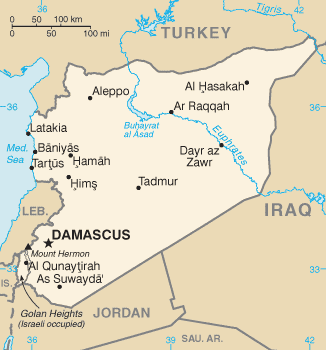
Check out Syria's page view statistics. In the past week, the number of people looking at the page has skyrocketed from 5,000 views a day to nearly 90,000. In the coming days it will probably jump a lot higher if the US launches a missile strike against that country. Now, a lot of these views are probably due to media attention or from the Syria article being displayed on the Main Page, but don't you think it's possible that among those 90,000 views are a bunch of military people looking for targets?

Or are they consulting Intellipedia?

Tuesday, August 27, 2013

Wikipedia pokes fun at itself

If you get a chance, you should check out Wikipedia:Silly things. If you think the behind the scenes work at Wikipedia is boring or irrelevant, think again. This page highlights minutiae like "bad jokes and other deleted nonsense," which displays the heights of (non-offensive) vandalism; "April Fools," which is the best humor posted April 1, and a "List of really, really, really stupid article ideas that you really, really, really should not create."

My favorite is probably Wikipedia: Deleted articles with freaky titles. Since I love lists, I always scroll right to the "list" section under the letter L and look at what gems this article features. Among them:
List of convicted drunk drivers who have become president of the United States 
List of Dads Who Make Other Dads Eat Bugs
The article itself was completely blank, but the talk page just read "my dad".
List of movie posters with lamps in them
          The list contained one item – Mission: Impossible – with a footnote saying "NB: does not contain lamps."
 And my favorite:
List of people who are alive or are dead

Wednesday, August 21, 2013

Can Wikipedia predict box office success?

Pic by Fernando de Sousa
Wikipedia may be able to predict whether a movie will be successful or not. Researchers from Oxford University, the Central European University at Budapest, and Budapest University of Technology and Economics have published an article in the journal PLOS ONE saying that user activity before a film's release date will indicate its success. The more edits and more page views an article on a movie gets, the more likely it is to be a box office hit.

You can read the PLOS ONE article here. It has a lot of math, and footnotes, but that's to be expected in a scientific journal. All they really needed to put in there were a few cool images that helped to illustrate the article.

Article: Early Prediction of Movie Box Office Success Based on Wikipedia Activity Big Data

Posting pictures to Wikipedia

Here we have a completely innocuous image, uploaded by User:Mattes, that shows a flight attendant's demonstration of an oxygen mask. It used to be on the Pre-flight safety demonstration article.

My question is: are a majority of Wikipedia pictures taken by users for the intention of getting on the site, or uploaded later because a user realized he had one that could illustrate an article? In this example, did User:Mattes take a flight and just happen to snap a photo of the demonstration, or did he take the picture with the intention of uploading it?

Sunday, August 18, 2013

Listen to Wikipedia

Listen to Wikipedia (by Hatnote)
I listened to this website for a few minutes and found it quite soothing:


Listen to Wikipedia

Developed by Stephen LaPorte and Mahmoud Hashemi from the blog Hatnote, the website converts recent user edits to sounds. Bells indicate additions and strings equal subtractions. Have it on for a while and it's like you have an infinite soundtrack to a Terrence Malick film playing in the background. As they noted on TechHive, it'd be interesting to listen to the site while there's a really heated edit war going on.

Just after a little while of watching, it seems to me there's more bells than strings.

Saturday, August 17, 2013

Good for them

Wikipedia largely alone in defying Chinese self-censorship demands

Wikipedia is all about information and knowledge, so kudos to them for flouting censorship laws.

Motion sickness

A quote:

When feeling motion but not seeing it (for example, in a ship with no windows), the inner ear transmits to the brain that it senses motion, but the eyes tell the brain that everything is still. As a result of the discordance, the brain will come to the conclusion that one of them is hallucinating and further conclude that the hallucination is due to poison ingestion. The brain responds by inducing vomiting, to clear the supposed toxin.
So your brain decides you're hallucinating and then just leaps to the conclusion that it's because of poison? And then makes you throw up? Man, your brain is either a jerk or it just decides on a course of action without much thought.

Motion sickness

Wednesday, August 14, 2013

October Crisis

Sorry, Australia, but this is how you have a crisis in an English-speaking Commonwealth country. Interesting that the greatest emergency in Canada's history resulted in just one death, and everyone from the government to the people were very disconcerted to see the War Measures Act invoked. It says something positive about the Canadian people and their spirit.

October Crisis

Tuesday, August 13, 2013

1975 Australian constitutional crisis

I don't mean to demean other countries' great political crises, but damn Australia? Couldn't you have thought of a more interesting one? Maybe a break-in at some Melbourne hotel or a body found on the ranch of the Prime Minister? Now those would have been interesting. Instead, we have this one, which takes four long paragraphs just to summarize. Words like "appropriation bills," "disabuse," and "double dissolution" are thrown around with abandon, and that's before all the casual vacancies.

You don't expect an American to actually follow all of this, do you Australia?

Anyway, basically many Australians were upset that the Governor-General, the UK's representative in Australia, dismissed and appointed a new government. How could their supposedly-independent nation still be taking orders from the Queen? It was all very suspect.

1975 Australian constitutional crisis

Thursday, August 8, 2013

Famous Wikipedian: Stephen Colbert

Pic by David Shankbone
Sometimes famous people edit Wikipedia. I'm guessing a fair amount of celebrities do this, bu probably not under their real name or any username, for that matter.

In July 2006, right before telling his viewers to edit the page on elephants to say that the population is tripling, Colbert edited an article on George Washington during the taping of his show. The edit, as seen here, is pretty funny, coming immediately after a long paragraph that contradicts its claim.

About a week after the posting, User:Stephencolbert was blocked indefinitely from editing, and the block stands to this day, seven years later. The notice on his talk page is pretty funny, saying the user was not blocked for his edit but instead for essentially impersonating Colbert. Furthermore, the notice states, the block would be lifted if only Comedy Central would confirm that account was that of Colbert himself. It has got to be the only personalized blocking notice on all of Wikipedia.

Colbert (or one of his staffers) never made another edit, though Colbert continues to rib Wikipedia on television.

User:Stephencolbert